.png)


Many people think all robins fly south, but many actually stay up north for winter. In winter, robins will stay in trees instead of foraging on the ground. - Curated by Jrez - Photographed by Kuma

- Photographed by Jeszar

- Photographed by Behira

- Photographed by Jeszar

Here we see a female downy woodpecker at a suet feeder. Woodpeckers especially enjoy suet which is essentially a block of animal fat that contains various types of seeds embedded into it. - Curated by Jrez - Photographed by Kuma

- Photographed by Jeszar

Downy woodpeckers are one of the smallest species of woodpecker. Males will have a red patch on the crown whereas females do not. - Curated by Jrez - Photographed by Kuma

Nuthatches are another common backyard bird. The tell tale sign of a nuthatch is the fact that it is one of the only bird species that prefers to travel headfirst while descending on a tree trunk. - Curated by Jrez - Photographed by Kuma

- Photographed by Jeszar

- Photographed by Jeszar

- Photographed by Jeszar

Common eiders are our largest duck species. These amazing ducks travel south during the winter all the way from the arctic tundra and Canada. The males have striking black and white plumage while the females are a beautiful tawny brown. They travel in large groups on the open ocean and also have the warmest down feathers which are used as the lining of many winter coats. - Curated by Jrez - Photographed by Jeszar

- Curated by Jrez - Photographed by Jeszar

Here we see a female hooded merganser out on the ice. Hooded mergansers are diving ducks and dive for small fish and crustaceans. Since much of their time is spent diving for food it was a rare moment to see this female out of the water, relaxing on top of the ice! - Curated by Jrez - Photographed by Jeszar

- Photographed by Jeszar

- Photographed by Jeszar

It was a very interesting moment when we spotted this lovely female wood duck amongst a flock of much more common mallard ducks. Wood ducks are tree nesters and rely on specific habitat conditions. They prefer secluded swampy areas with plenty of snagged branches. Due to habitat loss, wood ducks also rely on manmade housing for nesting cavities as well. - Curated by Jrez - Photographed by Jeszar
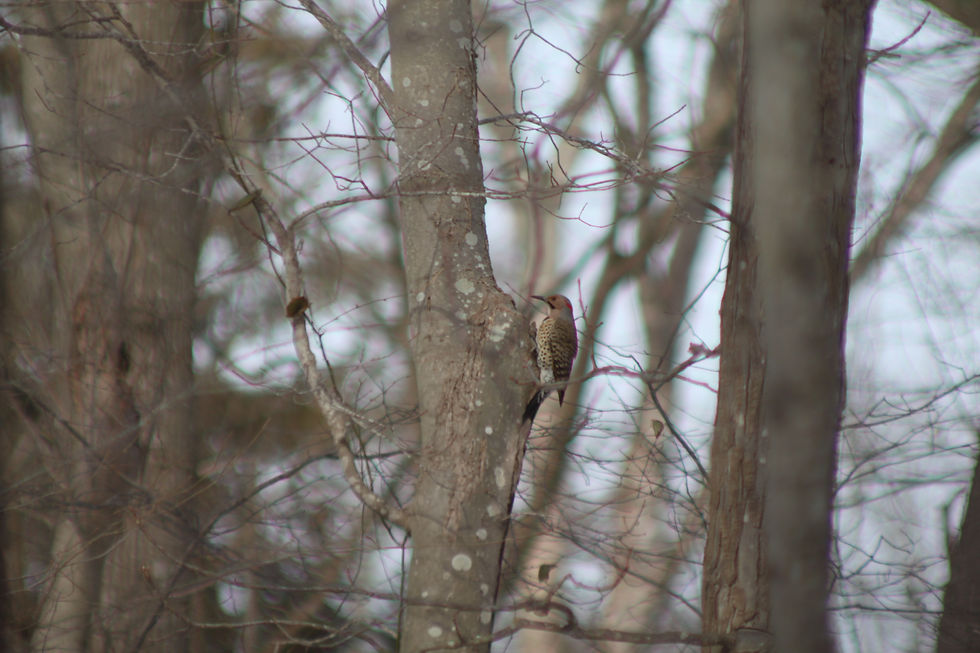
This male northern flicker is another somewhat common woodpecker species. Eastern males have a black cheek stripe, and are termed "yellow shafted" which means they have a yellow undertail. Western males have a red cheek stripe, and are called "red shafted" with a red undertail. - Curated by Jrez - Photographed by Jeszar

This small flock of greater scaups contains one male and three females. The difference between greater scaups and lesser scaups is the proportions of the head with male greater scaups having greener tinted feathers on the head region. Females are brown with white facial patches. - Curated by Jrez - Photographed by Jeszar

This juvenile red tailed hawk loved posing for the camera as he was eyeing a mouse on the side of the road. - Curated by Jrez - Photographed by Jeszar

This hawk was noted as a juvenile because the standard red tail feathers were pale and not fully grown in quite yet. - Curated by Jrez - Photographed by Jeszar

- Curated by Jrez - Photographed by Jeszar

- Curated by Jrez - Photographed by Jeszar

Many people might see this swan and label it another species based on appearance. Many people are not familiar with common species while they are in their juvenile stage. This mute swan's age would be comparative to a human teenager. - Curated by Jrez - Photographed by Jeszar

Mute swans look very graceful, but can actually be quite territorial and aggressive. They are an invasive species introduced from Eurasia and will outcompete many local species. - Curated by Jrez - Photographed by Jeszar

This is a small flock of American gold finches displaying their wintertime plumage which looks very different than the usual bright yellow breeding plumage which people are most familiar with. - Curated by Jrez - Photographed by Jeszar

- Curated by Jrez - Photographed by Jeszar

- Curated by Jrez - Photographed by Jeszar

This adult mute swan is using a wing display that typically means it feels threatened or being territorial. - Curated by Jrez - Photographed by Jeszar

Most mute swans can be found swimming in pairs rather than in large flocks. - Curated by Jrez - Photographed by Jeszar

The brant is a species of goose which can easily be mistaken for the more common Canada goose. It has a similar appearance, but with very different behaviors. Brants migrate southward in the winter from the Arctic and Canada. - Curated by Jrez - Photographed by Jeszar

Brants don't typically come up on land as often as Canada geese, and will usually stay close to the shoreline. They specifically eat eelgrass which grows in the ocean. - Curated by Jrez - Photographed by Jeszar

The male red breasted merganser is a very striking diving duck with its signature shaggy crest atop its head. It uses its serrated spear-like bill to catch fish and small crustaceans. -Curated by Jrez -Photographed by Jeszar

Atlantic brants have also grown accustomed to eating sea lettuce as an adaptation due to an eelgrass blight in the 1930s. - Curated by Jrez - Photographed by Jeszar

- Curated by Jrez -Photographed by Jeszar

